
IC Cost and Price Model
End-to-end cost and price model for low-power silicon integrated circuits.
Presenting a self-contained and comprehensive solution model that finds its utility in various applications, including benchmarking, price evaluation, and market research. This versatile tool is not only suited for Purchasing Departments but also extends its benefits to Integrated Device Manufacturers (IDMs), fabless companies, analysts, consultants, electronics systems entities, automotive companies, and a host of other industries.
To understand this evolving landscape, you need a strong industry-leading business analysis tool.





Market Analysis Solutions




End Market Analysis:





The Semiconductor Manufacturing Economics Advantage
These products give any organization unique and detailed insights into the semiconductor supply chain. Customers include the world’s largest IDMs, foundries, fabless, electronics systems, automotive companies, equipment OEMs and materials suppliers, analysts, universities, and start-ups.
Supported Assembly Processes:
Over 700 processes by company (in production only), and process node covering established products in ASIC, CIS, DSP, MCU, Mixed Signal, RF, DRAM, Flash, and Embedded Memory applications. (No advanced DRAM, and no 3D NAND – Strategic Model only).
Supported Wafer Size:
100mm, 125mm, 150mm, 200mm, and 300mm.
Supported Cost Elements:
Wafer cost, wafer test, packaging, and final test on 8 (eight) entries.

Apple A20 Pro: Inside the iPhone 18 Pro’s TSMC 2nm Processor
TechInsights analyzes Apple’s A20 Pro processor, revealing TSMC N2 gate-all-around technology, expanded AI and graphics processing, and a new side-by-side memory packaging architecture.

iPhone 18 Pro Max Unboxing and First Look
Watch TechInsights unbox the Apple iPhone 18 Pro Max before our experts begin detailed teardown and semiconductor analysis.
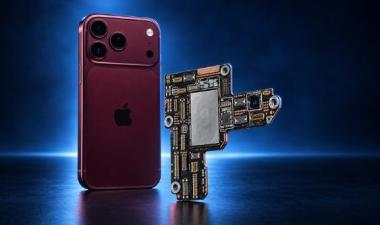
Apple iPhone 18 Pro Max Teardown: A20 Pro, X80 and Apple N1
See what TechInsights’ preliminary teardown reveals about the iPhone 18 Pro Max, including its A20 Pro processor, Qualcomm X80 modem, Apple N1, and new mmWave hardware.

The Authoritative Information Platform to the Semiconductor Industry.