Beyond the Resist: Why Lithography Isn't the Real PFAS Problem in the Fab
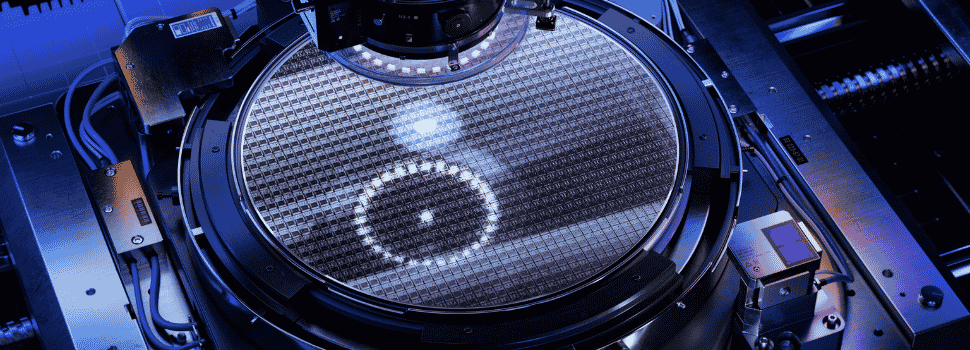
The semiconductor industry is currently celebrating an encouraging step in PFAS reduction efforts. This quarter, Fujifilm announced customer sampling of a fluorine-free negative photoresist for argon fluoride immersion ArFi lithography. With other major players like Merck following suit, multiple suppliers have demonstrated that eliminating per- and polyfluoroalkyl substances (PFAS) in lithography is no longer a niche experiment—it is a viable commercial reality.
But before the industry takes a victory lap, a critical reality check is required.
Our latest analysis using the TechInsights Manufacturing Carbon Module reveals a striking truth: Fluorine-free photoresist is the easy part of the PFAS problem. The real, structural challenge is dry etch.
To understand why fab-wide PFAS reduction remains limited, we must look past the lithography track and peer into the harsh chemistry of the etch chamber.
The Bounded Victory of ArFi Substitution
The industry's focus on ArFi materials is logical. Immersion lithography has long relied on fluorinated chemistry to enhance acid reaction efficiency, control surfaces, and suppress defects. Replacing these complex raw materials without sacrificing yield is an extraordinary engineering feat.
However, the impact of this substitution is structurally capped. While the lithography stack consolidates toward ArFi-based patterning at advanced nodes, TechInsights’ modeling shows that the share of materials directly addressable by these ArFi replacements plateaus at less than 20% of the total lithography stack in advanced nodes.
In other words, even if Fujifilm’s breakthrough is adopted across every single compatible layer, more than 80% of the lithography stack remains untouched. And that is still only looking at one side of the cleanroom
The Scaling Divergence: Lithography vs. Dry Etch
The true bottleneck of the green transition is dry etch. As devices become more complex—transitioning to 3D architectures, nanosheet transistors, and spacer-based integration—the number of pattern transfer steps increases. This has driven a massive divergence in fluorinated material intensity between process modules.
When indexed to a 28nm baseline:
- Lithography-related fluorinated materials increase modestly across nodes, peaking at roughly 1.5–2.2x baseline levels.
- Fluorinated etch-gas intensity scales aggressively, skyrocketing to 5–7x baseline levels at advanced nodes.
From 7nm onward, dry etch becomes the undisputed driver of advanced-node fluorine intensity.
Relative Growth in Fluorinated Material Intensity (28nm = 1)
Node
28nm
Advanced
Lithography Module
1.0x
1.5x - 2.2x
Dry Etch Module
1.0x
5.0x - 7.0x
Why Dry Etch Resists Direct Substitution
Why can't we swap out gases like we did with liquid photoresists? Because in plasma dry etch, fluorocarbon gases do far more than just remove material.
During the plasma reaction, these gases are dissociated to generate highly reactive fluorine radicals and polymerizing fragments. These fragments are chemically engineered to passivate sidewalls, protect delicate profiles, and maintain strict selectivity. Replacing them requires re-optimizing the entire plasma chemistry, tool behavior, and physical integration stack simultaneously—a hurdle that has prevented any broad qualification of non-fluorinated alternatives.
The Downstream Management Dilemma
Because we cannot easily substitute these gases, PFAS reduction in the etch module shifts from a material substitution problem to a system-level management problem. This is particularly critical following the U.S. Environmental Protection Agency's (EPA) updated 2026 interim guidance on PFAS destruction and disposal. For dry etch, residual emissions are a complex equation:
Residual Emissions = Escaped Input Gas + Process-Generated Fluorinated Byproducts
What goes in is chemically transformed. The plasma process and abatement systems can generate entirely new fluorinated byproducts that must be tracked, abated, and disposed of under increasingly strict regulatory scrutiny.
A Two-Track Strategy for 2026
If fabs want to make genuine progress on PFAS reduction, they must adopt a two-track strategy:
- Pursue qualified substitution where liquid lithography materials allow it.
- Build better etch-gas accounting, advanced abatement verification, and byproduct speciation for the dry etch processes where substitution is not yet mature.
Without addressing dry etch, fab-wide PFAS reduction will remain limited regardless of how many breakthroughs we see in lithography.