Why the AI Memory Shortage Could Keep DRAM and NAND Prices High for Years
The memory market has entered what may become the most pronounced supply shortage in its history. Unlike previous cycles driven by consumer electronics, today's imbalance is being fueled by AI, and there is little evidence it will ease anytime soon.
For decades, the memory industry followed a familiar pattern: demand increased, prices rose, customers reduced purchases, suppliers expanded production, and eventually the market returned to balance.
That cycle has changed.
Today, demand for DRAM and NAND is increasingly driven by AI datacenters, where memory has become a critical resource rather than a commodity. As a result, availability, not price, is becoming the market's primary concern.
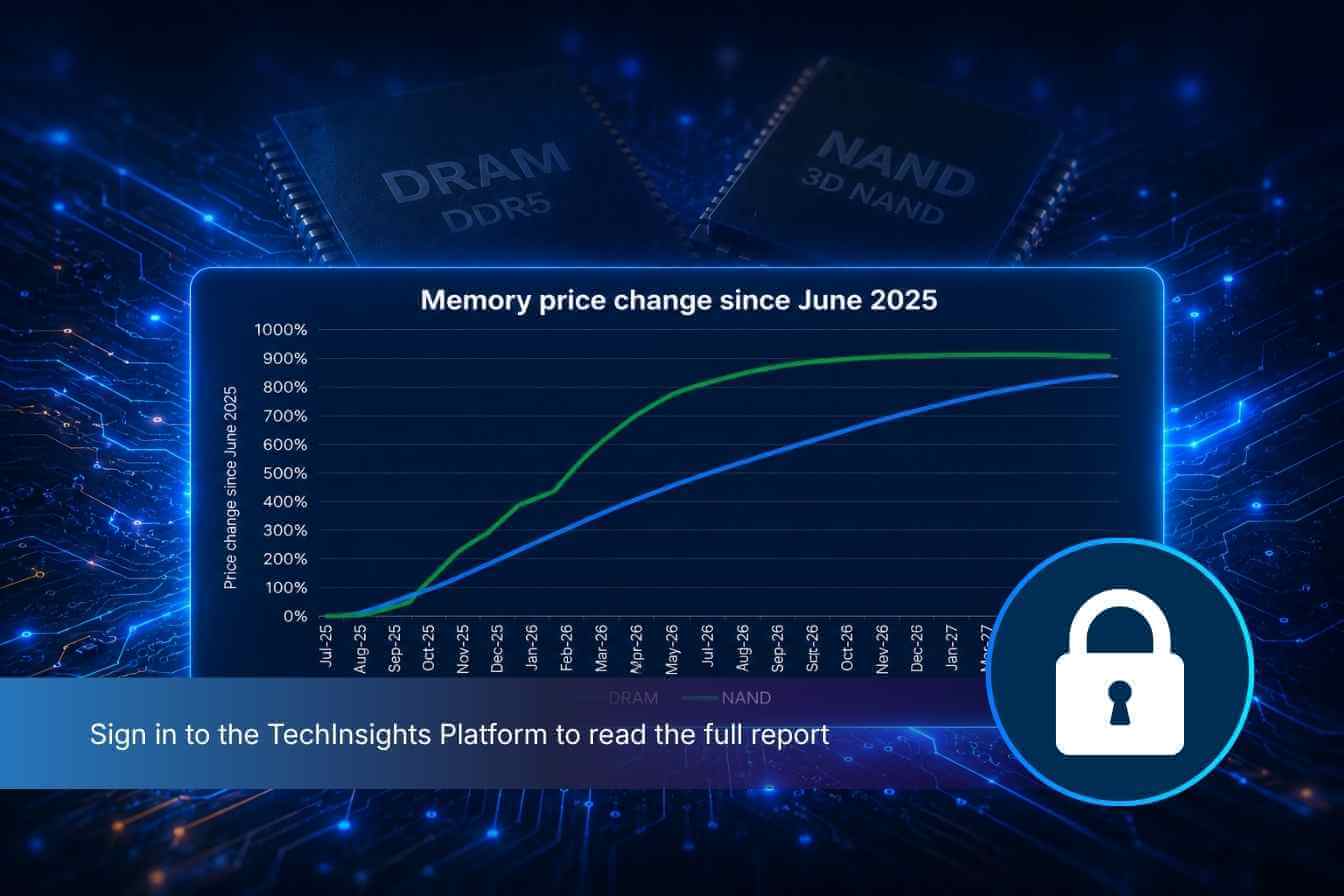
Figure 1 – AI is fundamentally changing the memory market. Learn why exploding AI demand, constrained supply, and years-long fab expansion timelines could keep DRAM and NAND prices elevated for years to come. (Source: TechInsights)
Why Isn't Higher Pricing Slowing Demand?
Normally, rising memory prices discourage purchases. Today, that relationship has weakened.
Most PCs, smartphones, and other consumer devices already ship with the minimum DRAM and NAND configurations users expect. Manufacturers have limited ability to reduce memory capacity simply because prices increase.
The situation is even more pronounced in AI infrastructure. Modern AI servers rely on massive amounts of DRAM, High Bandwidth Memory (HBM), and enterprise SSD storage to train and run increasingly complex models. Reducing memory capacity directly limits AI performance and deployment.
For many buyers, paying higher prices is preferable to delaying product launches or slowing AI expansion. In other words, there is effectively no acceptable substitute for securing memory supply.
Why Can't Manufacturers Simply Produce More Memory?
Although memory manufacturers continue investing hundreds of billions of dollars in new fabrication capacity, supply cannot increase overnight.
Building a leading-edge memory fab requires years of construction, equipment installation, process qualification, and production ramp-up. From groundbreaking to meaningful output, the process typically takes three to five years, and often longer where permitting or tooling creates additional delays.
Even after new fabs come online, reaching high production yields on advanced DRAM and NAND technologies takes additional time.
This means today's supply constraints cannot be solved with short-term investment.
Could the Market Tighten Further?
It is certainly possible, even likely.
AI infrastructure investment continues to accelerate as hyperscale cloud providers, enterprise customers, and sovereign AI initiatives all compete for limited memory supply. At the same time, each new generation of AI hardware requires even greater memory capacity than the last.
Demand is expected to continue growing faster than manufacturing capacity can be added, making 2027, and potentially the years beyond, even more challenging for buyers seeking reliable supply.
What Does This Mean for DRAM and NAND Prices?
Current market dynamics suggest pricing will remain supported for the foreseeable future.
Unlike previous memory cycles, this shortage is not simply the result of temporary inventory imbalances or consumer demand fluctuations. It reflects a structural shift in computing, where AI has fundamentally increased the amount of memory required across the datacenter.
Until manufacturing capacity catches up, a process likely measured in years rather than quarters, meaningful price declines appear unlikely.
Looking Ahead
Memory has become one of the most strategic components of the AI era. Without sufficient DRAM and NAND, servers cannot be deployed, smartphones cannot ship, and PCs cannot meet modern performance expectations.
The industry has experienced memory shortages before, but this one is different. AI has fundamentally changed the demand equation, reducing the market's traditional price sensitivity while creating sustained pressure on supply.
For semiconductor manufacturers, OEMs, and cloud providers, securing long-term memory availability may prove even more important than negotiating the lowest possible price. That shift is likely to define the memory market for the remainder of the decade.