Google I/O 2026: Gemini for Home Takes Center Stage as Google Pauses Smart Home Hardware
Google used I/O 2026 to expand Gemini for Home, accelerate third-party AI device adoption, and lay the foundation for agentic smart home experiences, without launching new hardware.
At Google I/O 2026, Google shifted its focus away from new smart home devices and doubled down on Gemini AI. Instead of unveiling hardware, the company showcased how Gemini for Home will expand across smart speakers, displays, cameras, and third-party devices.
A major announcement was the expansion of Google's Gemini Built-In reference designs, now available for smart speakers in addition to cameras. The program helps manufacturers quickly integrate Gemini AI into devices, accelerating the launch of AI-powered products without extensive software development. Google's Project Aura, developed with XREAL, is among the first examples of this strategy.
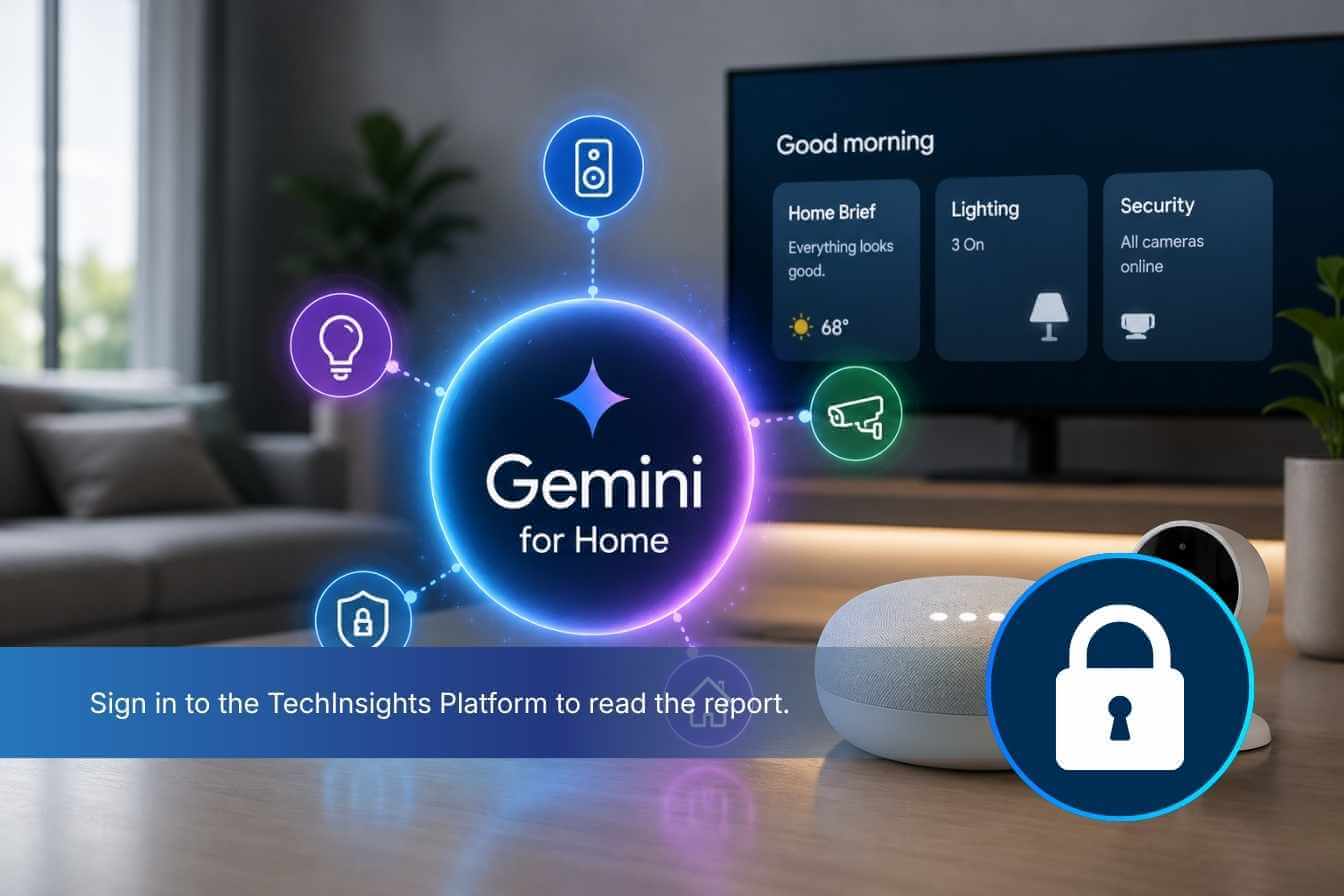
Figure 1 – Google I/O 2026 focused on Gemini for Home, AI-powered smart devices, and agentic AI, signaling a software-first future for the smart home market. (Source: TechInsights)
Google also expanded access to Gemini-powered features such as Ask Home, Home Brief, and Gemini camera intelligence, enabling service providers and partners to bring advanced AI experiences to consumers. AT&T's Connected Life security platform is one of the first services to integrate Gemini for Home capabilities.
Meanwhile, Gemini for Home continues its global rollout, now available across 16 countries and 10 languages outside the US. The platform has also been upgraded to the Gemini 3.1 model, improving conversational AI, contextual awareness, and smart home automation.
Looking ahead, Google's investment in agentic AI could transform the smart home experience. Future AI assistants may proactively manage lighting, climate control, security, entertainment, and household routines with minimal user input, increasing the value of connected home ecosystems.
What It Means for Semiconductor Companies
Google's AI-first strategy creates new opportunities for processors, NPUs, memory, sensors, and connectivity solutions needed to support on-device AI. However, the absence of major hardware announcements leaves uncertainty around the timing of future demand growth for consumer electronics components.