Apple iPad Pro M5 Teardown Analysis
What Apple’s M5 Architecture Reveals About the Future of Premium Mobile Computing
Premium tablets were already pushing the boundaries of performance, efficiency, and portability. Then Apple introduced the M5-powered iPad Pro. With its latest generation of Apple silicon, tandem OLED display technology, and highly integrated system design, the Apple iPad Pro 11-inch M5 represents one of the most advanced tablet platforms on the market today. On the surface, it's another evolution of the iPad Pro.
But for anyone involved in product development, semiconductor strategy, sourcing, or competitive intelligence, the more important questions are: How did Apple build it? And what does that reveal about the future of premium computing devices?
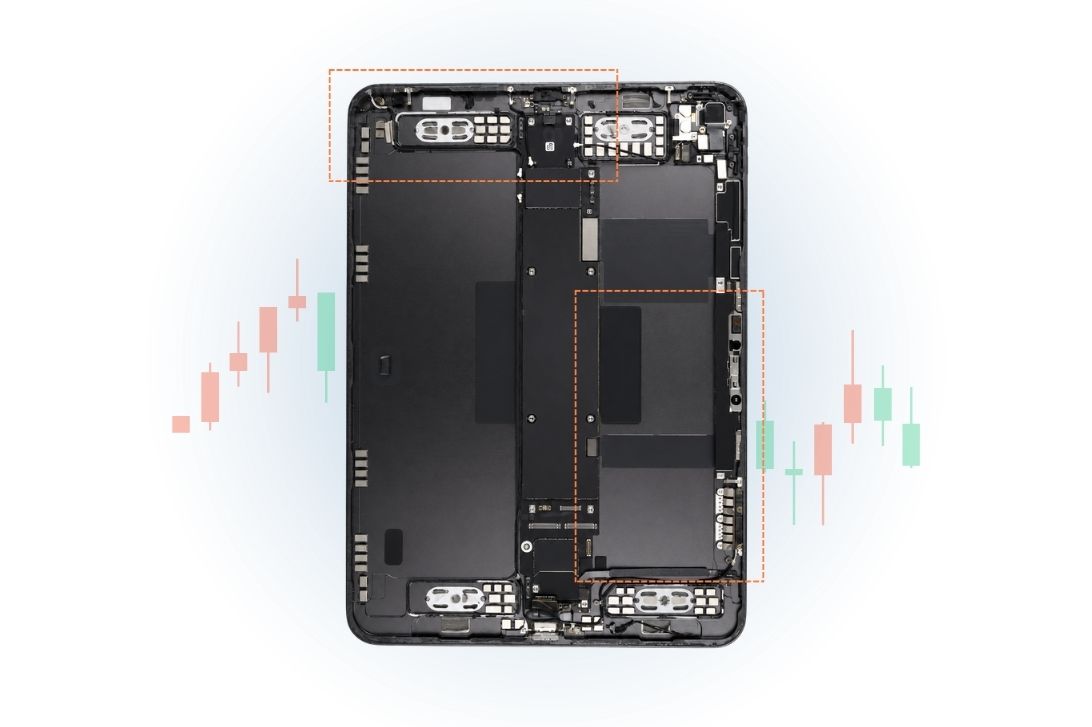
The New Benchmark for Premium Tablets
Every flagship device becomes a benchmark, the Apple iPad Pro M5 is no exception. More than just a tablet refresh, it represents Apple's latest thinking on how to deliver workstation-class performance within an ultra-portable form factor. Several key technologies make this possible:
Apple's M5 processor delivers the next evolution of custom silicon performance and efficiency
Tandem OLED display technology balances image quality, brightness, and power consumption
Advanced packaging and integration strategies maximize performance within a thin chassis
Optimized battery and power management systems support increasingly demanding workloads
Together, these technologies create a platform that competitors across the tablet market must now measure themselves against. This isn't simply a product update, it's a statement about where premium mobile computing is heading.
Why Specs Don’t Tell the Full Story
Apple provides impressive specifications and performance claims but specifications only tell you what a device does. They don't tell you:
- How the M5 processor is implemented within the overall system architecture
- Which suppliers are supporting key subsystems and components
- How Apple balances performance, battery life, thermals, and cost
- Where cost is concentrated throughout the device
- What engineering trade-offs were required to achieve the final design
- How Apple's component and packaging choices compare to competitors
These are the details that matter to engineering, sourcing, and strategy teams. And they're details that only become visible through teardown analysis.
Why This Matters Right Now
The Apple iPad Pro M5 isn't just another premium tablet launch. It's an indicator of larger trends influencing the broader computing industry, among the most important:
- Continued advancement of custom silicon as a competitive differentiator
- Increasing integration between hardware, software, and system architecture
- Growing importance of advanced display technologies
- Greater emphasis on performance-per-watt and battery efficiency
- Rising pressure to balance premium user experiences with cost realities
- For semiconductor vendors, the M5 platform offers valuable insight into Apple's silicon roadmap and its implications for future SoC competition
For device manufacturers, it provides a benchmark for evaluating performance, integration, and user experience expectations. For suppliers, it reveals where value is being created within next-generation computing platforms. And these trends extend well beyond tablets. They are shaping the future of laptops, AI-enabled devices, and premium consumer electronics as a whole.
From Curiosity to Competitive Advantage
There's a difference between seeing a product launch and understanding the decisions behind it. The organizations that gain an advantage aren't focused solely on product announcements. They're studying the engineering, supplier relationships, and cost structures that make those products possible. Teardown analysis delivers the necessary context for evaluating future technology directions:
Visibility into real-world engineering decisions
Insight into supplier and component strategies
Understanding of cost structures and value concentration
Benchmarks for product development and competitive analysis
Because in highly competitive markets, understanding how category leaders build their products can be just as important as understanding what those products do.