Meta Ray-Ban Display Teardown Reveals More Than Meets the Eye
TechInsights uncovers the Qualcomm Snapdragon AR1 platform, OmniVision display technology, Sony imaging, and Neural Band architecture powering Meta's next-generation smart glasses.
Meta's Ray-Ban Display with Neural Band represents the company's latest step toward AI-powered wearable computing. Released in September 2025, the two-part system combines smart glasses with a wrist-worn Neural Band that enables discreet gesture-based control. TechInsights' teardown reveals the key technologies, suppliers, and cost drivers behind one of the most advanced smart glasses platforms on the market.
At the heart of the Ray-Ban Display is the Qualcomm Snapdragon AR1 Gen 1, a processor designed specifically for AI-enabled smart glasses. The same chipset is also found in competing products such as the TCL RayNeo X3 Pro, highlighting Qualcomm's growing role in the emerging smart glasses ecosystem. Qualcomm components account for 15.7% of the total bill of materials (BOM) for the Meta Ray-Ban Display and Neural Band system.
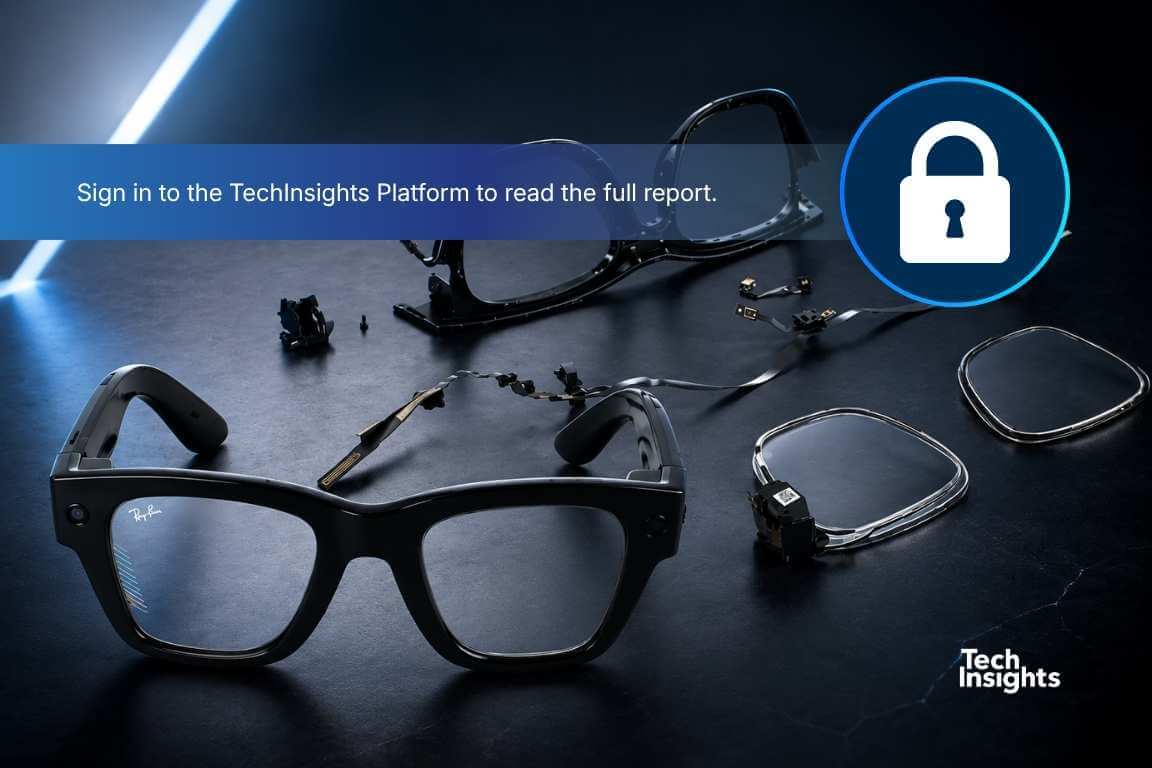
Figure 1 – TechInsights analyzes the components, suppliers, and design choices powering Meta's Ray-Ban Display and Neural Band system. (Source: TechInsights)
One of the most significant findings from the teardown is the importance of display technology. The Ray-Ban Display utilizes a single OmniVision LCoS display integrated into the right lens, while display-related components account for 50.8% of total BOM costs, making displays the largest cost category in the device. The design reflects Meta's focus on balancing functionality, power consumption, and wearability in a consumer-focused form factor.
The smart glasses also feature a 12 MP ultra-wide camera built around a Sony image sensor, enabling image capture and AI-powered visual recognition. Supporting voice interaction is a Syntiant bone-conduction microphone located in the left arm of the glasses. Together, these components allow users to interact with the device through voice commands, touch controls, and AI-assisted visual experiences.
While the glasses are the centerpiece of the platform, the Neural Band introduces an additional method of user input through gesture recognition. Equipped with eight sensors, the wrist-worn accessory detects hand and finger movements that can be used to control the glasses discreetly. The Neural Band contributes approximately 7.2% of the overall BOM and is powered by a Qualcomm QCC5100-001 SoC. Although the QCC5100 family is commonly used in Bluetooth audio applications, the absence of a microphone or speaker suggests Meta is leveraging the device for sensor processing, gesture recognition, and wireless communication.
The Meta Ray-Ban Display and Neural Band showcase how AI, computer vision, and new human-machine interfaces are converging in next-generation wearables. By combining a Snapdragon AR1 platform, advanced imaging, display technology, and neural gesture controls, Meta is helping define the future direction of smart glasses.