Meta’s glasses have brought relentless attention to camera-and-audio smart glasses, with Meta accounting for 4.6% of global wearables shipments in Q1 2026 and projected to surpass 9.5 million shipments in 2026. Overall, the smart glasses market continues to evolve and is expected to grow 75% globally in 2027 according to TechInsights wearables market data forecast.
TechInsights has analyzed non-VR glasses since Snap Spectacles debuted in 2016. This article breaks down the technology behind six display-free models analyzed in 2025 and 2026: HTC Vive Eagle, Huawei AI Glasses, Meta Oakley HSTN, Solos AirGo V Krypton 2, Xiaodu AI Glasses Pro, and Xiaomi AI Glasses.
From cameras to AI features
Snap Spectacles launched in 2016 with a 2 MP camera that recorded 10-second circular videos. In 2018, Vuzix added voice control and AI assistant support to its Vuzix Blade. Meta’s 2021 Ray-Ban Stories paired two 5 MP cameras with microphones and open-ear speakers. Its second generation, released in 2023, featured Qualcomm’s Snapdragon AR1 Gen 1.
Newer models add features such as camera-based object and scene recognition, translation, voice notes, transcription, and meeting summaries.
Common architecture, different platforms
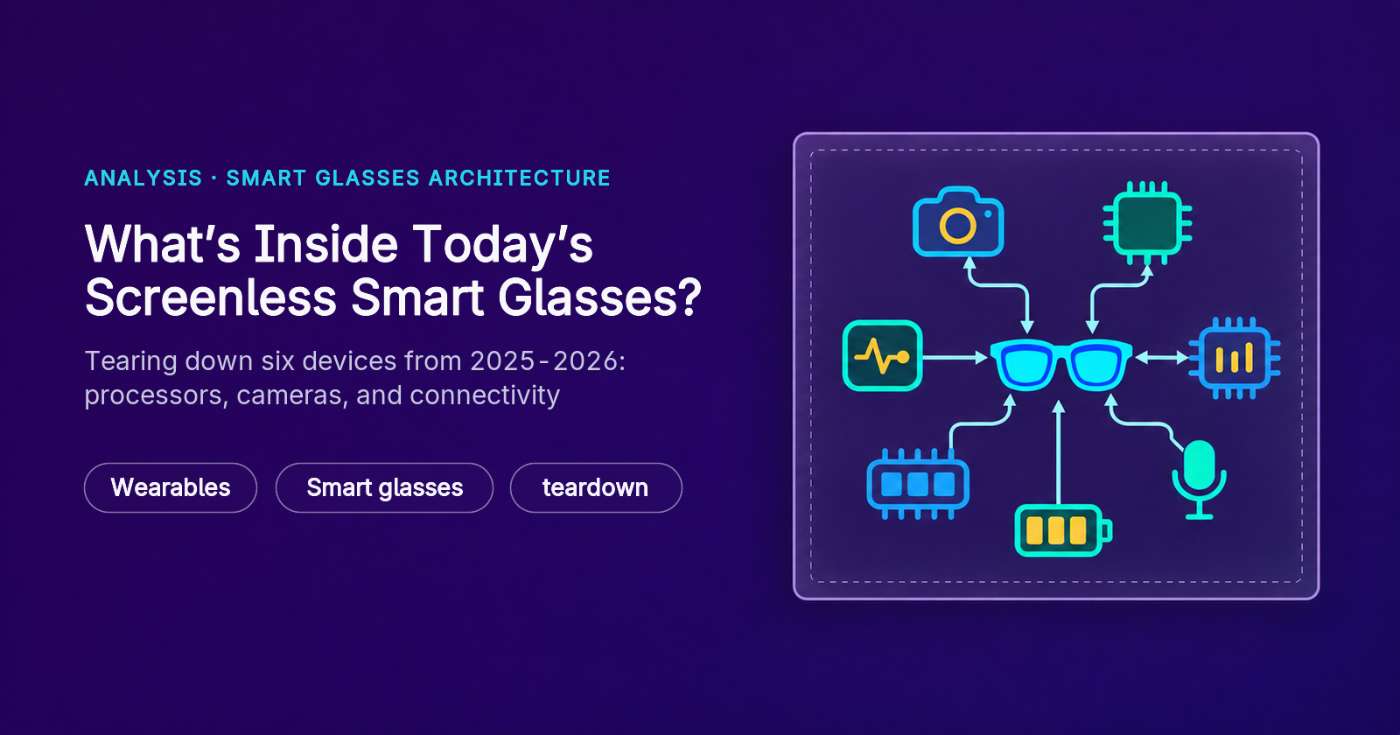
The six glasses share a basic architecture: an application processor supports subsystems such as the camera and battery, alongside sensors and audio components (microphones, audio amplifier, and speakers). Connectivity is handled separately by a Wi-Fi/Bluetooth SoC.
TechInsights identified three main processor platforms across the analyzed devices: Qualcomm’s Snapdragon AR1 Gen 1, Huawei’s proprietary Kirin Wearable processor, and Ambiq’s latest Apollo SoC. In terms of connectivity, most of the analyzed glasses support Wi-Fi 7 and Bluetooth 5.4, except for the Solos AirGo V Krypton 2.
Camera implementations also vary, and battery design offers another point of comparison. In terms of image sensor technology, most glasses use 12 MP sensors. The HTC Vive Eagle and Xiaomi AI Glasses, for example, feature Sony IMX681 12 MP image sensors. Batteries were typically lithium polymer, with capacities ranging from 100 mAh to 252 mAh.
Adoption brings design questions
Cameras and microphones can capture images, video, and conversations from the wearer’s perspective, while bystanders may not realize they are being recorded. In October 2026, the European Data Protection Board outlined privacy concerns and recommended measures including visible recording indicators, privacy-by-design features, data minimization, and on-device processing.
The future for smart glasses is driven by AI-native use cases and new platform entrants. In November 2026, Samsung and Google opened preorders for eyewear developed with Gentle Monster and Warby Parker. Apple is expected to launch in 2027.
These six teardowns show how current manufacturers are integrating camera and audio functions into everyday eyewear. Explore TechInsights’ full technical breakdown on the TechInsights Platform.
Featured Analyses
Explore TechInsights coverage of wearables, the current landscape of non-VR camera smart glasses, and the global smartglasses sales forecast.
- CCD-2611-804TechInsights Market Data: Wearables reportView report
- CCD-2610-806The current landscape of Non-VR Camera Smart GlassesFree report
- CCD-2308-805Global Smartglasses Sales Forecast for 88 Countries 2012-2031View report