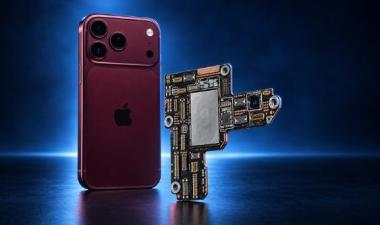
Using Teardown Data to Confirm What’s Real, Not Just Announced
New sensor, display, and semiconductor technologies show up in roadmap conversations long before anyone can confirm they're shipping. This white paper shows how physical teardown evidence closes that gap for R&D and engineering teams.
Four ways teardown data confirms what's shipping, drawn from 15,000+ device teardowns.
35+ years
continuous reverse engineering
0+
device teardowns
0+
chip teardowns
0+
metrics documented per teardown
The gap between announced and confirmed
A supplier says a part is production-ready. A patent filing hints at where a category is headed. Neither confirms whether a technology has moved from one early adopter's design into something three or four competitors have already shipped.
Commit too early, based on an announcement rather than a shipping product, and a design ties itself to a supply base that might never reach volume. Wait too long, and a competitor's already-shipped advantage becomes the new baseline everyone else gets measured against.
A disassembled product settles the question. It confirms which supplier built a component, what package type they used, and which supporting parts shipped alongside it: evidence no datasheet or analyst report provides at the level of a single product. Reviewed across enough products and enough time, that evidence turns into a documented pattern of how fast a technology is moving, and which companies are moving it.
Four ways teardown data confirms adoption and integration:
Cross-product component and supplier tracking
Confirms which manufacturer, part number, and package type ship in current products, and whether a component has moved from one early-adopter supplier to several production-qualified sources.
XRF-verified material and alloy composition tracking
Uses X-ray fluorescence analysis to confirm the actual elemental makeup of metal components, catching alloy and plating changes that visual inspection alone misses.
Interconnect and system integration method tracking
Documents how manufacturers connect and mount a new component: interconnect type, mechanical fasteners, and sealing materials at the boundary with its housing.
Modular versus integrated design pattern tracking
Tracks whether a technology ships as a discrete, replaceable module or gets built directly into the main architecture, and how that pattern shifts across product generations.
Who it's for
Built for how R&D and engineering work
Both teams draw on the same underlying evidence. They apply it at different points in the development cycle.
R&D and Advanced Engineering
Deciding what to watch and when to act
R&D decides which technologies earn active development investment, and when one has matured enough to come off the watch list. Teardown intelligence gives these teams confirmed adoption timelines and supplier counts instead of estimates, evidence that shapes how a team sequences its own roadmap.
Product engineering
Deciding how to build what R&D has committed to
Engineering takes a technology R&D has already committed to and decides how to build it: which interconnects to use, whether to package it as a module, what materials to specify at the connection points. Teardown records show which approaches other manufacturers already used, narrowing the range engineering has to test on its own.
Staying Ahead of Component and Integration Trends
What's inside:
- Four teardown-based capabilities for tracking technology adoption and integration
- Representative examples covering ultra-wideband sensors, display interconnects, and alloy tracking
- How R&D and product engineering use the same evidence at different points in the development cycle