Philips 5000 Series Video Palm Recognition Smart Lock Teardown Reveals Cost Advantage
TechInsights examines Samsung's Exynos 2600 platform, Shannon S5410X2 modem, Wi-Fi 7 implementation, and next-generation RF front-end design.
Palm vein recognition is emerging as a new biometric authentication method for smart locks, offering touchless access and enhanced security compared to traditional fingerprint-based systems. The Philips 5000 Series DDL250X-14HWC brings this technology to the residential market while delivering a surprisingly competitive cost structure.
TechInsights' teardown and manufacturing cost analysis reveals that the Philips 5000 Series has the lowest total manufacturing cost among three leading palm recognition smart locks analyzed. The Lockly Visage Zeno Series Deadbolt Edition costs approximately 45% more to manufacture, while the Lockin Veno Pro LKMSD411 is approximately 68.5% higher.
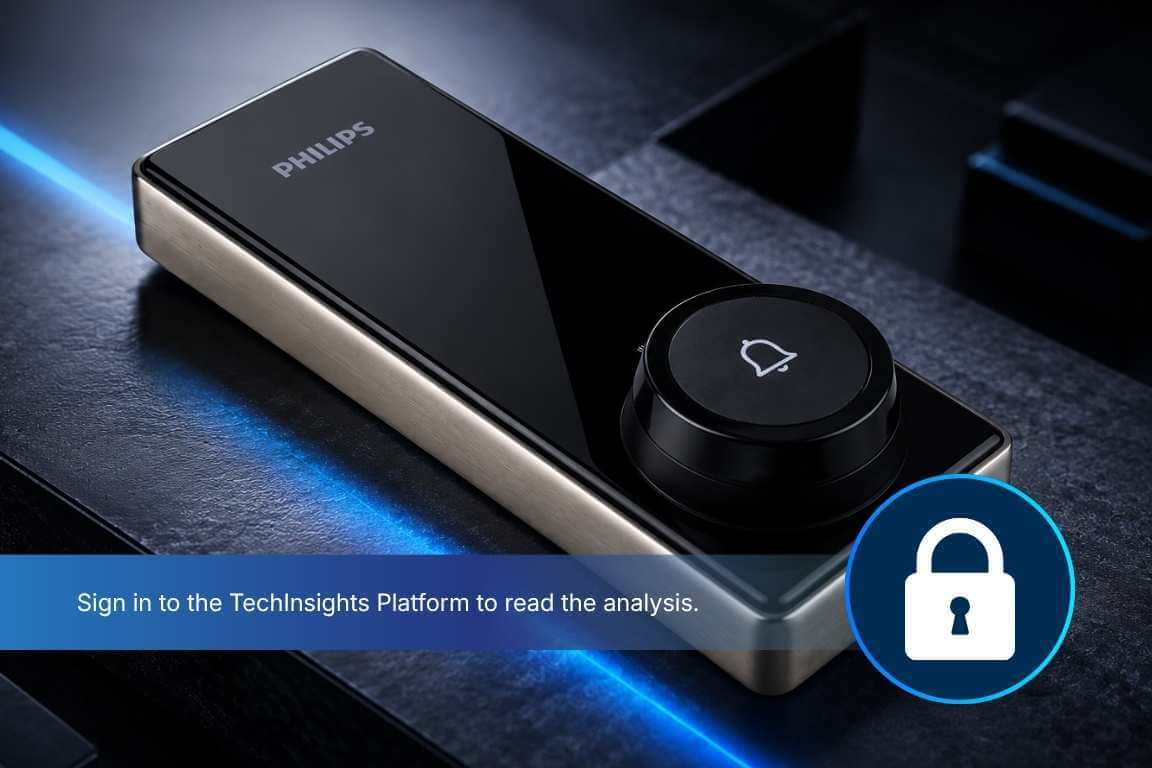
Figure 1 – Explore the Philips 5000 Series DDL250X-14HWC smart lock teardown. Discover its palm vein recognition technology, key components, and how it achieves the lowest manufacturing cost among leading biometric smart locks. (Source: TechInsights)
Palm Recognition Powered by Dedicated Imaging Hardware
At the heart of the Philips 5000 Series is the Shengdian Technology PVM320H Palm Vein Recognition Camera Subsystem. The module integrates an Ingenic Semiconductor X2100 applications processor, a 2 MP image sensor, and an IR emitter LED to capture and authenticate palm vein patterns.
The smart lock also includes WiFi 4 and Bluetooth 5.1 connectivity, an AirTouch AT5810 5.8 GHz radar module, and a PIR motion sensor for presence detection and automation features.
Cost Breakdown Highlights
Non-Electronics is the largest cost category across all three devices, accounting for 22.37% of the Philips 5000's manufacturing cost. Camera and imaging hardware is another major contributor, representing nearly 20% of total cost.
While the Philips, Lockin, and Lockly products share similar category mixes, notable differences emerge in supporting materials, connectivity, battery technology, and sensor content. The Philips design keeps connectivity costs particularly low, accounting for just 1.10% of total manufacturing cost.
Philips vs. Lockin Veno Pro
The Philips 5000 Series and Lockin Veno Pro offer similar feature sets, including palm recognition and radar sensing. The primary differences are the Lockin's additional fingerprint sensor and rechargeable lithium-polymer battery, while the Philips model uses four CR123A batteries.