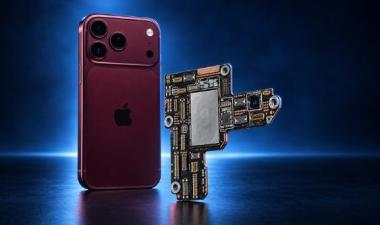
Inside the Apple iPhone 17: What It Reveals About the Future of Mobile Engineering
10 Min Read June 24, 2026

Smartphones were already among the most complex devices to design. Then Apple raised the bar again.
With the Apple iPhone 17, the industry is seeing a new level of ambition, bringing next-generation silicon, an advanced camera and imaging system, and a refined connectivity architecture into a device that hundreds of millions of people will carry in their pocket.
On the surface, it's another flagship release. But for anyone in product development, sourcing, or competitive strategy, the real question is:
How did they build it, and what does it cost to do so?
A New Level of Integration
Smartphones have always been complex. The iPhone 17 raises that complexity further.
Each generation of iPhone has pushed integration forward, but the iPhone 17 represents a meaningful step in how Apple is balancing silicon performance, imaging capability, and system-level efficiency, all within the constraints of a premium consumer device.
The A19 chip advances processing performance, power efficiency, and on-device AI capability; a sophisticated camera and imaging stack, accounting for a significant share of total BOM spend, reflects Apple's continued investment in computational photography; RF and modem architecture evolves to support faster, more reliable connectivity, and thermal management, battery density, and component placement force constant engineering trade-offs.
This isn't just iteration. It's the compounding result of years of vertical integration decisions, and it sets the benchmark every competitor has to respond to.
Why Specs Don’t Tell the Full Story
Apple will tell you about the A19's performance gains, the camera system's new capabilities, and the improvements to battery life.
But specs only tell you what a device does.
They don't tell you which suppliers were selected and why; how the A19 is architected and integrated at the die and package level; where cost is concentrated across the camera, display, and connectivity stack; what trade-offs were required to hit Apple's performance and margin targets, or how design decisions ripple through the broader supply chain.
That's where teardown analysis becomes essential.
Why This Matters Right Now
The Apple iPhone 17 isn't just another product release. It's a signal of where the mobile market is heading.
Greater silicon integration and on-device AI capability are raising the floor for flagship performance; camera and imaging systems are becoming the primary battleground for differentiation, and a growing share of total device cost; RF and connectivity architecture continues to evolve as 5G deployments mature and new standards emerge, and tighter cost constraints are intensifying pressure on sourcing, supplier relationships, and component strategy.
And this isn't limited to smartphones. The same pressures are shaping adjacent categories, from tablets and laptops to AI-enabled mobile devices redefining what a handheld platform can do.
From Curiosity to Competitive Advantage
There's a difference between seeing a device and understanding it.
The companies that lead in this space aren't relying on assumptions. They're working from detailed, validated insight into how products are actually built.
That's what teardown analysis delivers: clarity on real-world engineering decisions; insight into supplier and component strategy; visibility into cost structures and margin pressures, and benchmarks for your own product roadmap.
Because in a market defined by trade-offs, understanding those trade-offs is the advantage.
Go Inside the Apple iPhone 17
If you want to understand how Apple engineered its most advanced smartphone, and what it really takes to build it, you can access the full Deep Dive teardown.